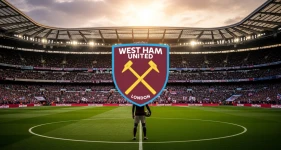
West Ham United FC represents one of the major institutions of London football. Founded in 1895 as Thames Ironworks, the club embodies the working-class tradition of London's East End. The Hammers have played at the London Stadium (formerly Olympic Stadium) since 2016, a 62,500-capacity venue that replaced the legendary Boleyn Ground (Upton Park) and now serves as the temple of the Irons, representing the club's ambitions for future success.
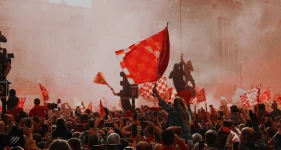
West Ham's history shines with three FA Cups and a European Cup Winners' Cup in 1965, their first major European trophy. The club is also famous for producing three heroes of the 1966 World Cup: Bobby Moore (captain), Geoff Hurst (hat-trick in final), and Martin Peters, establishing West Ham's reputation as a producer of English talent. More recently, West Ham won the Europa Conference League in 2023, their first European title in 58 years, triggering scenes of jubilation throughout the East End and marking a new era of success.
West Ham embodies working-class London football with a playing philosophy summarized by the motto "The Academy of Football," emphasizing attractive, attacking play. The club possesses one of England's best youth academies that has revealed talents like Rio Ferdinand, Frank Lampard, Joe Cole, and Declan Rice, demonstrating consistent production of top-quality players. The Hammers maintain passionate rivalries with Millwall, Chelsea, and Tottenham. The objective is to establish themselves durably in the top 6 and regularly win trophies, perpetuating the tradition of a club that has marked English football history and represents East London pride.
After two years of legal hell and £80m dreams that never materialised, Lucas Paqueta leaves West Ham for Flamengo in the biggest transfer South Americ...
Erling Haaland scored twice and assisted another as Manchester City cruised past West Ham 3-0, with the Norwegian surpassing Cristiano Ronaldo's Premi...
Sunday's Premier League action features Manchester City's trip to fourth-placed Crystal Palace, the first Tyne-Wear derby since 2016, and Nottingham F...
A blockbuster weekend of Premier League action awaits, with the first top-flight Tyne-Wear derby since 2016 headlining a programme packed with title r...
FAQ
West Ham play at the London Stadium since 2016, a 62,500-capacity venue built for the 2012 Olympics. This stadium replaced the legendary Boleyn Ground (Upton Park), the club's historic temple for 112 years in the East End that held deep emotional significance for supporters. The move to the London Stadium represented a controversial but necessary step to increase capacity and revenue, enabling West Ham to compete financially with bigger clubs. While some fans miss Upton Park's intimacy and atmosphere, the London Stadium provides modern facilities and has hosted memorable European nights, gradually becoming accepted as the Hammers' new home.
Founded in 1895 as a works team from an ironworks factory, West Ham won three FA Cups and a European Cup in 1965, establishing themselves as a major force. The club is famous for producing three heroes of the 1966 World Cup: Bobby Moore, Geoff Hurst, and Martin Peters - a unique contribution to England's greatest triumph. This legacy established West Ham's reputation as the 'Academy of Football,' a nickname that reflects their tradition of developing talented, technical players who play attractive football. The club has experienced ups and downs but maintains their identity as representatives of working-class East London values and traditions.
West Ham counts three FA Cups (1964, 1975, 1980), one European Cup Winners' Cup (1965), and the Europa Conference League (2023). This last title, first European trophy in 58 years, marked the club's renaissance and triggered historic celebrations throughout East London. The trophy validated years of rebuilding and demonstrated West Ham's capacity to compete at European level. The 1966 World Cup contribution through Moore, Hurst, and Peters remains a source of immense pride. These achievements, combined with periods of top-flight stability, establish West Ham among England's historically significant clubs despite lacking the consistency of the very biggest.
The nickname of Hammers comes from the club's origins founded by workers from Thames Ironworks, a shipbuilding factory where hammers were essential tools. The crossed hammers on the badge symbolize this working-class identity that makes the club's pride and connects them to East London's industrial heritage. This nickname reflects West Ham's blue-collar roots and the community they represent. The Irons (another nickname) similarly references the ironworks origins. These names embody the club's character - hardworking, resilient, and proud of their working-class background, values that continue to define West Ham's identity in modern football despite gentrification of their traditional East End heartland.
The Academy of Football describes West Ham's philosophy based on offensive play and youth talent development. This reputation comes from the academy's excellence that has produced world stars like Moore, Lampard, and Ferdinand, establishing West Ham as a talent factory. The nickname reflects the club's commitment to playing attractive, technical football and developing players properly rather than just buying success. Legendary manager Ron Greenwood established this philosophy in the 1960s-70s, emphasizing skillful play. While the nickname is sometimes questioned given the club's trophy drought, West Ham's continued production of Premier League and international players validates the Academy of Football reputation.
Three West Ham players were essential to England's 1966 World Cup victory: Bobby Moore (legendary captain and arguably England's greatest ever player), Geoff Hurst (only player to score a hat-trick in a World Cup final), and Martin Peters (who scored England's second goal). This unique contribution makes eternal pride for West Ham and demonstrates the club's significance to English football beyond trophies. Moore's leadership, Hurst's historic treble, and Peters' contribution created a legacy that transcends club football. No other club contributed three players to England's World Cup-winning team, making this West Ham's most significant achievement and cementing their place in English football history.
In 2023, West Ham won the Europa Conference League defeating Fiorentina 2-1 in the final in Prague. This victory, first European title since 1965, triggered historic scenes of jubilation throughout London's East End, with thousands of fans celebrating in the streets. The achievement under manager David Moyes validated the club's progress and provided supporters with a trophy after years of near-misses. Goals from Saïd Benrahma and Jarrod Bowen secured the win. The victory meant European qualification and restored pride after decades without silverware. The emotional scenes demonstrated what the trophy meant to long-suffering supporters who had waited generations for European glory.
West Ham has produced legends: Bobby Moore, Rio Ferdinand (who became one of the world's finest defenders), Frank Lampard (Chelsea and England legend), Joe Cole, Michael Carrick, Jermain Defoe, and more recently Declan Rice (who became England's most expensive player). This exceptional production confirms the Academy of Football reputation and demonstrates West Ham's talent development quality. Other notable graduates include Glen Johnson, Mark Noble (one-club man and captain), and numerous other Premier League players. The academy's consistent production of top talent generates significant transfer revenue while maintaining the club's identity. This talent pipeline represents West Ham's greatest asset and sustainable competitive advantage.
Main rivalries concern Millwall (East End derby - one of English football's most intense and historically volatile), Tottenham, and Chelsea. These London confrontations generate electric atmosphere and represent more than football - they're battles for neighborhood pride and bragging rights across London's football landscape. The Millwall rivalry is particularly fierce, rooted in geographic proximity and working-class identity. Matches against Tottenham and Chelsea carry significant meaning as West Ham seek to compete with their wealthier London neighbors. These derbies embody traditional London football culture and passion, creating some of the season's most anticipated and emotionally charged fixtures for supporters on all sides.
West Ham aims to establish themselves durably in the top 6 of the Premier League and regularly qualify for European competitions. The objective is to win more trophies and confirm the renaissance initiated by the Conference League 2023 victory. The Hammers want to become a club that consistently challenges for honours while maintaining their traditional identity and connection to the East End community. Investment in squad, facilities, and infrastructure aims to close the gap with England's established elite. The ambition is sustainable success that makes West Ham a regular European competitor and occasional trophy winner, restoring the club to the prominence their history and support deserve.