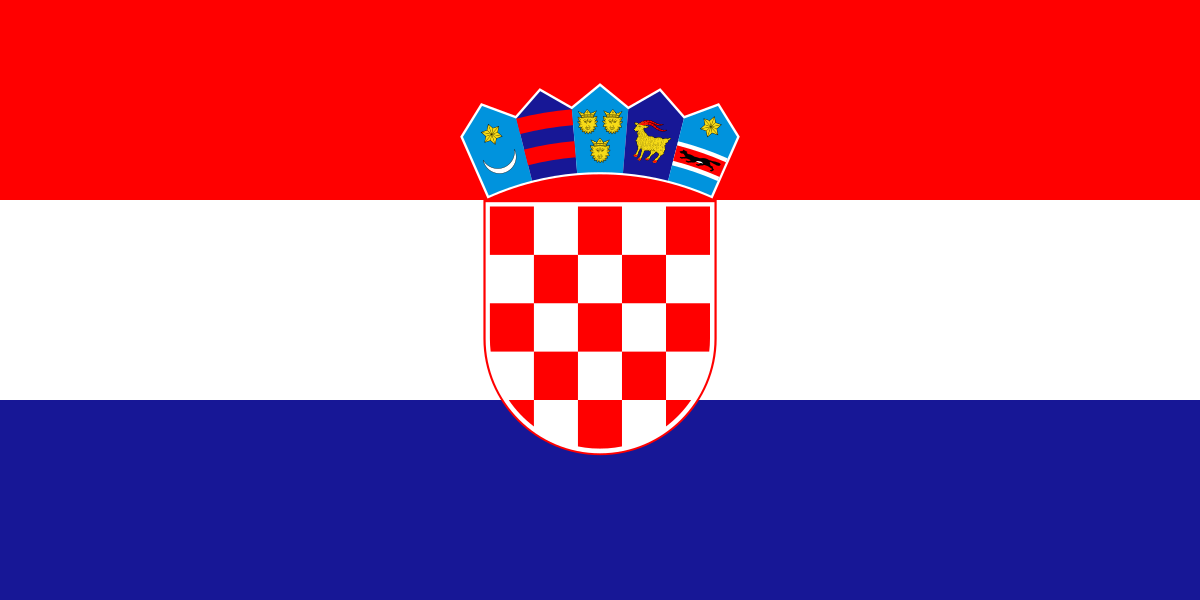
Croatia represents one of modern European football's finest success stories. Since independence in 1991, the Croatian national team established itself as a major international force, far exceeding expectations for a country of only 4 million inhabitants. The Vatreni (The Blazing Ones) proudly wear their iconic red and white checkered jersey, a national symbol that became iconic in world football.
Croatia's epic reached its peak during the 2018 World Cup in Russia, where Croatia finished runners-up against France, achieving a historic run led by Luka Modrić, that year's Ballon d'Or winner. Four years later in Qatar 2022, the Croatians secured another bronze medal, confirming their status as formidable underdogs. The team plays its matches at Zagreb's legendary Stadion Maksimir, Croatian football's temple.
Croatia's strength lies in its ability to produce exceptional talents generation after generation. From Davor Šuker to Luka Modrić through Ivan Rakitić and Mario Mandžukić, the country revealed world-class players shining in Europe's biggest clubs. The national team relies on refined technical play, a winning mentality forged by the country's history, and exemplary cohesion that makes the greatest football nations tremble.
FAQ
Croatia plays its matches at Zagreb's Stadion Maksimir, a historic 35,123-capacity venue. This legendary stadium, inaugurated in 1912, hosted Croatian football history's greatest moments and offers passionate atmosphere during international matches.
Modern Croatia played its first official match in 1990, just before independence. From its first major tournament participation in 1996, the team impressed. The pinnacle remains the 2018 World Cup final, followed by 2022 bronze medal, extraordinary feats for this young nation.
Croatia boasts a 2018 World Cup final (runners-up) and two bronze medals (1998 and 2022). The Vatreni also reached Euro quarter-finals several times, confirming their status as a major world football nation.
Luka Modrić, 2018 Ballon d'Or winner, is Croatian football's absolute icon. Davor Šuker, 1998 World Cup top scorer, Zvonimir Boban, Ivan Rakitić, and Mario Mandžukić also belong to the pantheon of legends who wore the checkered jersey at the highest international level.
Vatreni means "The Blazing Ones" in Croatian, a nickname perfectly reflecting this team's passion, combativeness, and indomitable spirit. This term also embodies Croatian supporters' fervor, reputed among Europe's most passionate.
Croatia favors technical and elaborate football, based on ball mastery, short passes, and rapid circulation. The team relies on world-class midfield and combines offensive creativity with defensive solidity.
Croatia's training system relies on recognized academies like Dinamo Zagreb's and Hajduk Split's. The federation invests massively in youth identification and development, regularly producing players capable of competing in Europe's best leagues.
Main sporting rivalries concern Serbia (history-charged), Bosnia and Herzegovina, and Slovenia, other nations from former Yugoslavia. These encounters always generate particular intensity beyond purely sporting context.
The red and white checkered pattern (šahovnica) is Croatia's historic emblem, dating back to the Middle Ages. This strong national symbol represents the country's identity and became one of world football's most recognizable and appreciated jerseys.
Despite limited population, Croatia aspires to remain in the world top 10 and systematically contest major tournament final phases. The long-term objective is winning a major title, a goal increasingly attainable given recent performances.