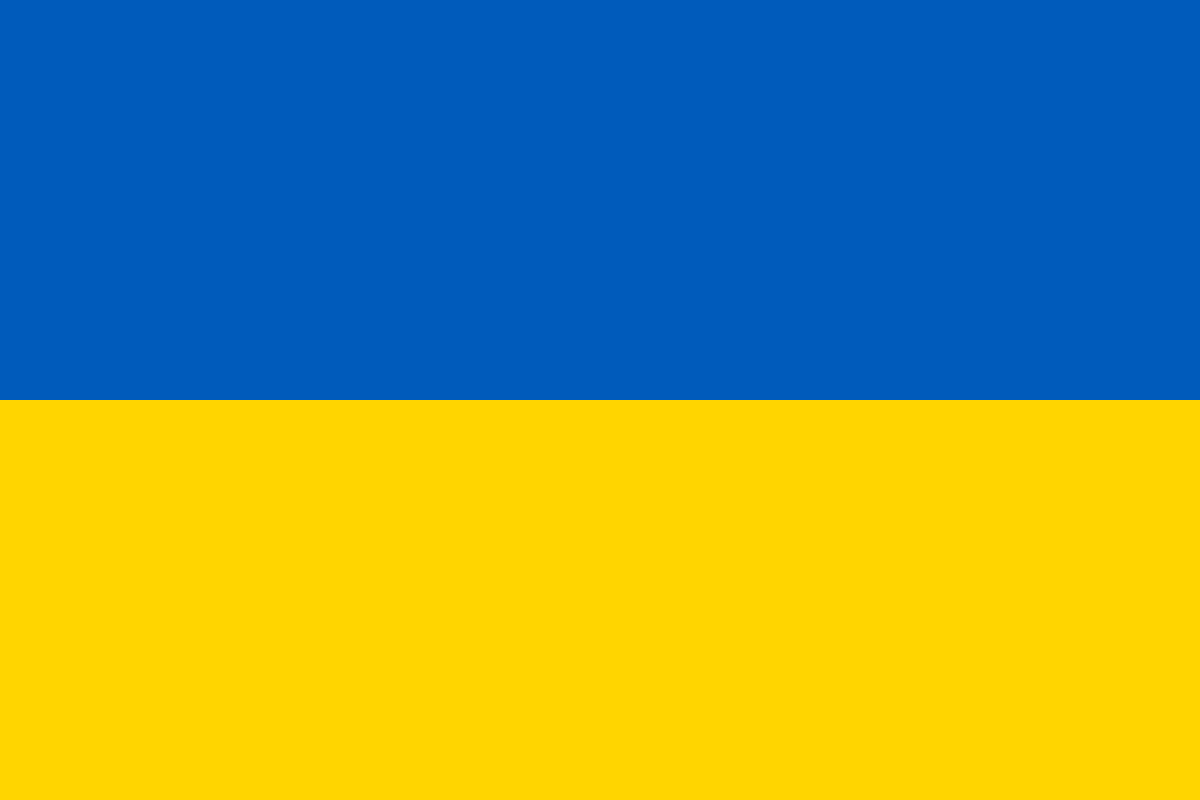
Ukraine represents an emerging football nation on the European scene. Founded in 1991 after independence, the Ukrainian federation quickly built a competitive team. The Zhovto-Blakytni (Yellow and Blue, flag colors) primarily play at Kiev's NSK Olimpijskyj, a legendary 70,000-capacity stadium serving as Ukrainian football's temple and hosting the 2018 Champions League final.
Ukraine's history peaked during the 2006 World Cup quarter-finals, a major achievement for this young nation. The team also reached Euro 2020 quarter-finals, confirming steady progress. Players like Andriy Shevchenko, 2004 Ballon d'Or winner, carried Ukrainian colors to the highest world level and inspired an entire generation.
Ukraine relies on a talented generation competing in major European leagues. The country regularly produces technical players trained in Dynamo Kiev and Shakhtar Donetsk academies. The team favors offensive and spectacular football delighting supporters. Despite difficult context related to current conflict, the national team continues proudly representing the country and uniting an entire nation behind yellow and blue colors, symbols of hope and resilience.
FAQ
Ukraine primarily plays at NSK Olimpijskyj in Kiev, a legendary 70,050-capacity stadium inaugurated in 1923. This historic venue hosted the 2018 Champions League final and serves as the national team's primary home.
Founded in 1991 after independence, Ukraine quickly progressed internationally. The moment of glory remains the 2006 World Cup quarter-finals, a historic feat for this young nation that confirmed its status with Euro 2020 quarter-finals.
Major successes include 2006 World Cup quarter-finals and Euro 2020 quarter-finals. Ukraine also won the Toulon Tournament several times with youth teams, demonstrating training quality.
Andriy Shevchenko, 2004 Ballon d'Or winner, remains the greatest legend. Andriy Voronin, Oleksandr Zinchenko, and Ruslan Malinovskyi also marked recent history. These players shone in Europe's biggest clubs and elevated the team to the highest level.
Zhovto-Blakytni means "Yellow and Blue" in Ukrainian, referencing national flag colors. These shades symbolize Ukraine's wheat fields (yellow) and sky (blue), embodying national identity and Ukrainian people's pride.
In 2006, Ukraine achieved a historic run during its first World Cup, reaching quarter-finals. Led by Shevchenko, the team beat Switzerland before falling to Italy, future world champions.
Ukraine favors offensive and technical football, based on possession and rapid combinations. The team combines traditional Soviet school with modern European influences, creating an attractive style delighting supporters.
Ukraine relies on excellence academies of Dynamo Kiev and Shakhtar Donetsk, recognized among Eastern Europe's best. These centers regularly produce talents exported to major European leagues.
In the current difficult context, football represents a symbol of unity and hope for all Ukrainian people. National team matches mobilize the entire nation and offer moments of collective pride transcending daily difficulties.
Ukraine aims to regularly qualify for major tournament final phases and advance past quarter-finals. Despite difficult circumstances, the team aspires to continue proudly representing its country and inspiring an entire nation through performances.