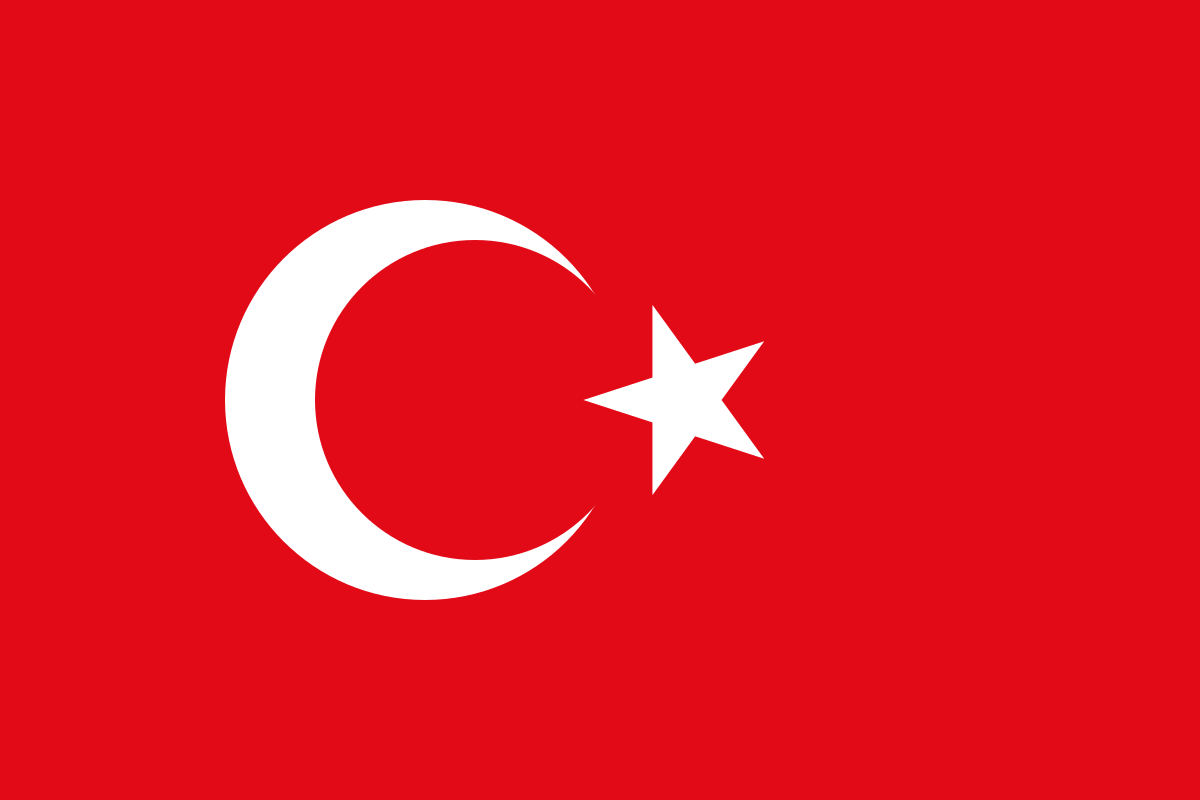
Turkey represents a rising European football power. Founded in 1923, the Turkish federation built a solid football tradition affirmed on the international stage. The Milli Takım (National Team) plays its matches in several modern stadiums across the country, notably in Istanbul, Ankara, and Izmir, reflecting the football passion of a nation of 85 million inhabitants.
Turkey's history peaked during the 2002 World Cup in Korea-Japan where the team finished third, a historic feat remaining Turkish football's greatest moment of glory. This golden generation, led by Hakan Şükür and Rüştü Reçber, propelled Turkey onto the world stage. The country also reached Euro 2008 semi-finals, confirming steady progress.
Turkey relies on exceptional passion and total commitment characterizing its football. The country regularly produces talented players competing in major European leagues. The Milli Takım favors combative and technical football, combining European school with Anatolian intensity and fervor. The team maintains intense rivalries with Greece and other neighboring nations, encounters mobilizing the entire country and generating unique electric atmosphere.
FAQ
Turkey plays its matches in several modern stadiums: Türk Telekom Arena and Atatürk Olympic Stadium in Istanbul, Ankara Arena, and Gürsel Aksel Stadium in Izmir. These spectacular venues offer typically Turkish passionate atmosphere.
Founded in 1923, Turkey experienced its moment of glory in 2002 by finishing third at the World Cup. This golden generation, then Euro 2008 semi-finals, marked Turkish football's golden age and propelled the country among respected nations.
The greatest success remains third place at the 2002 World Cup, a historic feat for Turkish football. Euro 2008 semi-finals and several major tournament final phase participations confirm the Milli Takım's steady progress.
In 2002, Turkey achieved a historic run reaching the semi-final before falling to Brazil. The third-place victory against South Korea triggered incredible scenes of jubilation and remains engraved as Turkish football's greatest moment.
Legends include Hakan Şükür (all-time top scorer), Rüştü Reçber, Emre Belözoğlu, and more recently Arda Turan and Hakan Çalhanoğlu. These players elevated the team to the highest level and shone in Europe's biggest leagues.
Milli Takım simply means "National Team" in Turkish. This term is universally used in Turkey to designate the national team, reflecting national pride and Turkish people's deep attachment to their football team.
Turkey favors combative and passionate football, based on physical commitment, defensive solidarity, and efficient transitions. The team combines European technique and Anatolian fervor, creating a unique style intimidating opponents.
Turkey invests in major club academies like Galatasaray, Fenerbahçe, and Beşiktaş. The federation also develops programs to identify talents across the country and train them according to modern European standards.
The main rivalry concerns Greece, a historic encounter charged with political and cultural tensions. Turkey also maintains sporting rivalries with other neighboring nations, creating always very tense matches mobilizing the entire country.
Turkey aims to regularly qualify for European Championship and World Cup final phases. The objective is reproducing the 2002 feat and winning a major title, the ultimate ambition for a nation of 85 million football enthusiasts.