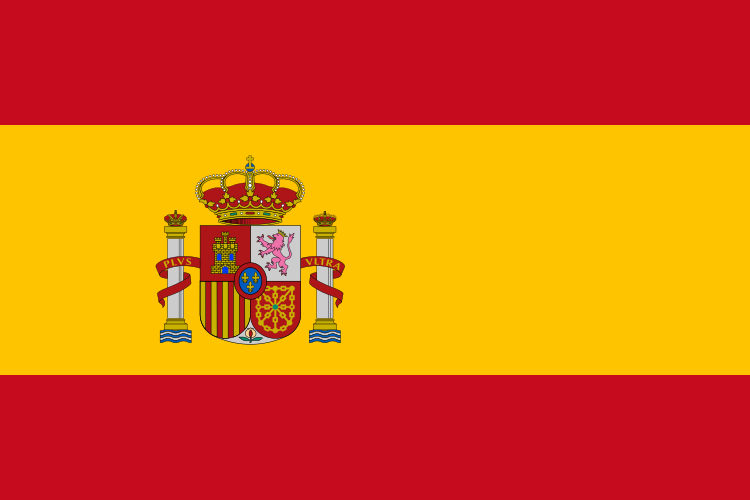
Spain represents one of the greatest nations in football history. La Roja (The Red One) embodies technical and tactical excellence, having revolutionized modern football with tiki-taka. The national team plays its matches in several iconic stadiums across the country, from Santiago Bernabéu to Camp Nou, demonstrating Spanish football's rich heritage.
Spain's history features an exceptional golden era between 2008 and 2012, winning two consecutive European Championships (2008, 2012) and the 2010 World Cup, a unique feat in football history. This dominance, orchestrated by legendary players like Xavi, Iniesta, and Casillas, marked an entire generation and established Spain as the global reference for beautiful football.
Spain relies on a unique playing philosophy based on possession, short passes, and total ball control. The country consistently produces technical talents trained in the academies of Spain's great clubs. La Roja won Euro 2024, confirming its return to the summit. The national team maintains historic rivalries with Portugal, France, and Italy, high-level encounters that captivate all of Europe. The objective is to maintain this excellence and continue making football history.
FAQ
Spain plays its matches in several iconic stadiums: Santiago Bernabéu in Madrid, Camp Nou in Barcelona, La Cartuja in Seville, and Mestalla in Valencia. This rotation allows Spanish football to be celebrated across all regions of the country.
Spain experienced its golden age between 2008 and 2012, winning three consecutive major tournaments (Euro 2008, World Cup 2010, Euro 2012). This exceptional period propelled La Roja to become the greatest team of its era and revolutionized world football with tiki-taka.
The trophy cabinet includes one World Cup (2010) and four European Championships (1964, 2008, 2012, 2024). This recent dominance, with three consecutive major titles, represents one of the greatest dynasties in international football history.
Tiki-taka is the revolutionary playing style developed by Spain, based on extreme possession, rapid short passes, and intense pressing. This philosophy, inherited from Guardiola's FC Barcelona, dominated world football and inspired teams globally.
Icons include Xavi Hernández, Andrés Iniesta (2010 final goal scorer), Iker Casillas, Sergio Ramos, David Villa, and Fernando Torres. These players wrote the finest pages of La Roja's history and left their mark on world football.
In 2010 in South Africa, Spain won its first world title by defeating the Netherlands 1-0 in the final with an Iniesta goal in extra time. This historic victory crowned four years of absolute dominance in Spanish football.
Spain maintains its possession philosophy while incorporating more verticality and physical intensity. The new generation combines tiki-taka's technical heritage with a more direct and dynamic approach, as demonstrated in the Euro 2024 triumph.
Spain has an exceptional training system with La Liga academies among the world's best. FC Barcelona, Real Madrid, and Athletic Bilbao regularly produce talents who perpetuate the Spanish technical tradition and supply the national team.
Main rivalries include Portugal (Iberian rivalry), France, and Italy. These encounters between great European nations always generate high-level matches and captivate football fans across the continent.
Spain aims to maintain European dominance after the 2024 title and win a second World Cup. With a talented new generation including Pedri, Gavi, and Lamine Yamal, La Roja aspires to mark a new golden era in Spanish football.