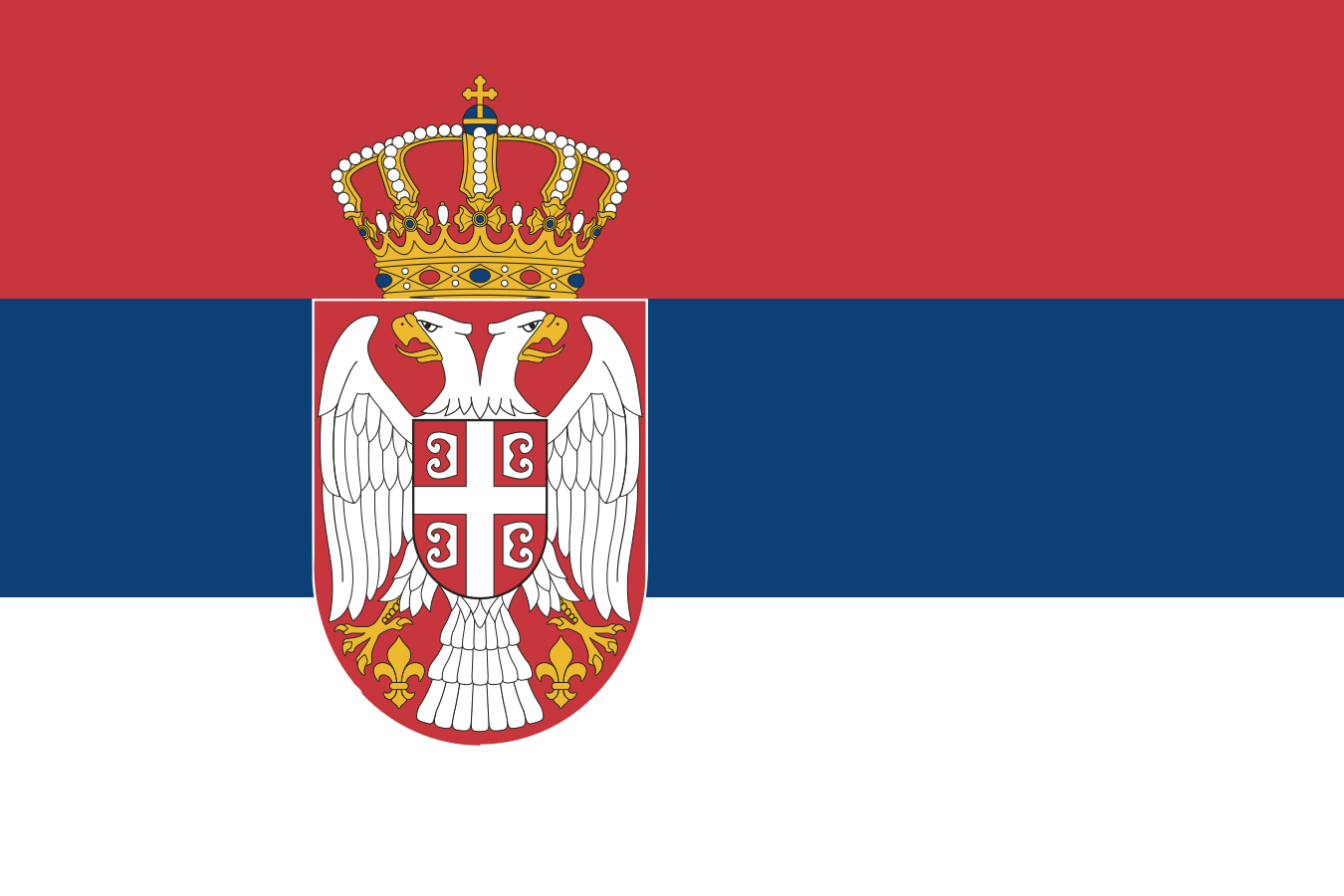
Serbia represents the heir to a rich Balkan football tradition. As successor to Yugoslavia then Serbia and Montenegro, the modern Serbian national team played its first official match in 2006 after independence. The Orlovi (Eagles) play at Stadion Rajko Mitić (formerly Marakana) in Belgrade, a 55,000-capacity Serbian football temple offering one of Europe's most fiery atmospheres.
Serbia's football history continues the glorious Yugoslavia that won Euro 1960 and shone in several World Cups. Modern Serbia inherited this heritage and quickly qualified for major tournament final phases. In 2010, the national team participated in its first World Cup as an independent nation, confirming Serbian football quality.
Serbia relies on developing exceptional talents competing in Europe's biggest clubs. The country regularly produces technical and combative players like Nemanja Vidić, Aleksandar Kolarov, and Dušan Tadić. The Eagles favor committed football combining Balkan solidity and refined technique. The national team maintains history-charged rivalries with other Balkan nations, particularly Croatia, encounters far exceeding sport. The objective is to regain Yugoslavia's heights and establish themselves among Europe's best nations.
FAQ
Serbia plays at Stadion Rajko Mitić in Belgrade, a 55,538-capacity venue also known as Marakana. This legendary stadium, renowned for its electric atmosphere created by Serbian supporters, is one of Balkan football's temples.
Modern Serbia played its first match in 2006 after independence. Heir to Yugoslav tradition (1960 European champions), the team quickly returned to major tournament final phases, participating in several World Cups and maintaining its place among competitive European nations.
As an independent nation, Serbia participated in several World Cups (2010, 2018, 2022) and Euro qualifications. Yugoslav heritage includes the 1960 European title, two Olympic finals (1948, 1952, 1956, and 1960 - gold), and several World Cup quarter-finals.
Orlovi means Eagles in Serbian, a national symbol representing strength, pride, and fighting spirit. The double-headed eagle features on Serbian coat of arms and embodies national team identity, reflecting the Serbian people's combative and proud character.
Modern legends include Nemanja Vidić, iconic Manchester United defender, Dejan Stanković, Branislav Ivanović, and more recently Dušan Tadić, Sergej Milinković-Savić, and Aleksandar Mitrović. These players shone in Europe's biggest leagues.
Serbia favors combative and physical football typically Balkan, combining defensive solidity, total commitment, and refined technique. The team relies on intensity, character, and resilience to compete against Europe's greatest nations.
Serbia has an exceptional training tradition, inherited from Yugoslav school. Major clubs like Red Star and Partizan Belgrade regularly produce talents exported to Europe's best leagues, maintaining Serbian football's reputation.
The main sporting rivalry concerns Croatia, an encounter charged with post-Yugoslav history. Serbia also maintains rivalries with other Balkan nations like Bosnia and Herzegovina and North Macedonia, always very tense matches exceeding sport.
The nickname Marakana (little Maracana) references Brazil's famous stadium. This designation testifies to Red Star Belgrade stadium's legendary atmosphere, considered one of Europe's most impressive for supporter intensity.
Serbia aims to systematically qualify for World Cup and European Championship final phases. The medium-term objective is advancing past the first round of a major tournament and regaining historic Yugoslavia's heights.