

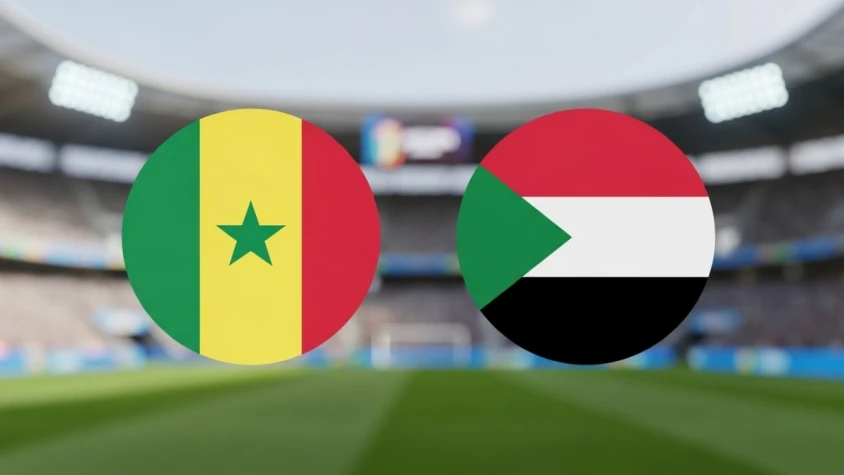
Tangier witnessed something more than a football match on Saturday evening. When the final whistle blew at the Grande Stade de Tangier, confirming Senegal's 3-1 victory over Sudan, it marked the end of one of this Africa Cup of Nations' most emotionally charged chapters.
The scoreline suggests comfort. The reality was anything but.
A six-minute nightmare for the favourites
Sudan came to Tangier carrying the weight of a nation ravaged by civil war. They left having reminded everyone that football, at its core, remains gloriously unpredictable.
Inside six minutes, the 117th-ranked team in the world had the 19th-ranked reeling. Aamir Abdallah – a semi-professional who plays for Melbourne Victory's second-tier affiliate in Australia – curled a stunning effort over Édouard Mendy and into the far corner. The kind of goal you'd expect from a Champions League final, delivered by a player most European fans had never heard of.
The Senegalese bench froze. Sadio Mané, Nicolas Jackson, Ismaïla Sarr – they'd been caught cold.
"We played a good game from the beginning against Sudan but the goal we conceded came as a shock and felt like punishment," Mané admitted afterwards. "Still, we managed to react well and score the equaliser."
Pape Gueye: the unlikely hero
When you think of Senegalese match-winners, Pape Gueye isn't the first name that comes to mind. The Villarreal midfielder doesn't carry the celebrity of his teammates. He doesn't have Mané's global brand or Jackson's Premier League profile.
What he has is an eye for the moment.
His equaliser on 29 minutes was pure opportunism – Mané pressing high, dispossessing a Sudanese defender, laying the ball square for Gueye to sweep home from the edge of the box. Clinical. Unfussy. Exactly what Senegal needed.
But his second? That was something else.
As the first-half clock ticked into added time, following a chaotic VAR intervention that saw both a penalty and a goal ruled out for Senegal, Gueye collected Nicolas Jackson's cutback and unleashed a first-time strike into the top corner. It was the goal of a man who'd decided enough was enough.
The former Marseille man, now flourishing in La Liga, had dragged Senegal from crisis to comfort within 45 minutes.
The teenager who keeps delivering
If you haven't been paying attention to Ibrahim Mbaye, start now.
The Paris Saint-Germain forward is 17 years old. Let that sink in. Born in Trappes in 2008, he already has a Champions League winner's medal in his collection from last season's PSG triumph. He represented France at every youth level from U16 to U20 before making the emotional decision to play for his father's homeland.
When Pape Thiaw introduced him in the 73rd minute, it felt like housekeeping. Sudan were chasing shadows, Senegal were cruising at 2-1.
Four minutes later, Mbaye had made the game safe.
Mané – who else? – threaded a perfect through ball, and the teenager finished with the composure of a veteran, firing past Monged Abuzaid at his near post. It was his first AFCON goal. It won't be his last.
What makes Mbaye special isn't just his pace or his technique. It's his fearlessness. This is a kid who'd been playing against Arthur Masuaku the previous week and turning him inside out. Against Sudan, he simply continued what he'd been doing all tournament: proving that age is genuinely just a number.
"At 17, at this level, it's impressive," noted Idrissa Gana Gueye, his experienced teammate. "He's not afraid. He plays freely and enjoys himself on the pitch."
Sudan: the story that deserved better
Here's the uncomfortable truth about this match: Sudan never had a chance. Not really.
Since April 2023, their country has been consumed by a devastating civil war between the Sudanese Armed Forces and the paramilitary Rapid Support Forces. More than 40,000 people have died. Fourteen million have been displaced. The UN calls it the world's worst humanitarian crisis.
Sudan's players haven't trained at home in three years. They haven't played a home match either. Their domestic league is suspended. Their biggest clubs – Al Merrikh and Al Hilal – now compete in Rwanda. Players scattered across Libya, Egypt, anywhere that would take them.
And yet here they were, in the knockout stages of the Africa Cup of Nations for the first time in 14 years.
Kwesi Appiah, the Ghanaian coach who's somehow held this group together, was visibly emotional before the match when asked about the war's impact on his players.
"It is not something we want to talk about, but we are hoping that if we win, it will let the war calm down or even cease," he said. "There was a game we won recently when the armies put their guns down and everyone was celebrating. Football can change things in this world."
They didn't win on Saturday. But for 45 minutes, until Gueye's second goal broke their resistance, they competed. Sheddy Barglan almost pulled them level at the start of the second half, forcing Mendy into an athletic save. It wasn't enough, but it was something.
What this means for Senegal
Pape Thiaw's side are now unbeaten in 15 consecutive AFCON matches – a run stretching back to the 2019 final defeat against Algeria. Only Nigeria (16) and Egypt (24) have managed longer streaks in the competition's history.
The statistics paint a picture of dominance: 1.68 expected goals to Sudan's 0.43, 14 shots to 8, complete second-half control. Yet the manner of the early scare will concern Thiaw. Senegal were sluggish, distracted, and vulnerable until Gueye's intervention.
Mané remains the architect, of course. Two more assists against Sudan take his AFCON total to eight – more than any other player since Opta began tracking the statistic in 2010. He's overtaken Yaya Touré. He's writing history with every pass.
But the 2021 champions will need more from Jackson, more from Sarr, and more collective focus if they're to navigate what comes next.
The road ahead
Senegal remain in Tangier for the quarter-finals on January 9, where they'll face either Tunisia or Mali. Kalidou Koulibaly returns from suspension, restoring the defensive leadership that was sorely missed against Sudan.
For Sudan, the journey home carries a different weight. They may have lost 3-1, but they return as heroes to a nation desperate for reasons to celebrate. In a tournament often dominated by resources, infrastructure, and financial muscle, they proved that determination still counts for something.
Abdallah's goal will be replayed in Sudanese homes for years to come. Sometimes football is just football. Sometimes it's everything else.
