

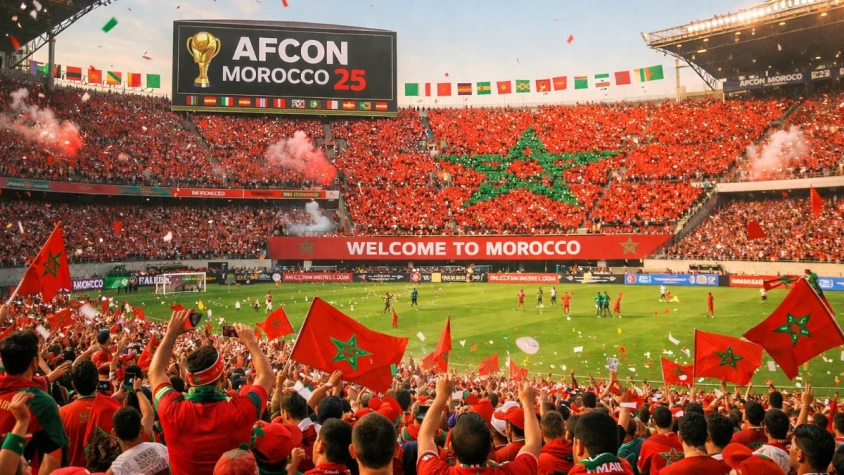
The 2025 Africa Cup of Nations in Morocco (December 21 – January 18) will disrupt Europe's top five leagues at the most congested period of the season. Here is a comprehensive breakdown of how each major competition will be affected.
Premier League: title race implications
The Premier League loses 32 players to AFCON 2025, with significant concentration among mid-table clubs. Sunderland face the heaviest burden, losing six players including Chemsdine Talbi (Morocco), Reinildo (Mozambique), Bertrand Traoré (Burkina Faso) and three others. For a promoted side battling for survival, this represents a substantial blow during fixtures against Manchester City, Brighton and Crystal Palace.
Manchester United lose top scorer Bryan Mbeumo (Cameroon, 6 goals), leading creator Amad Diallo (Ivory Coast) and Noussair Mazraoui (Morocco). Ruben Amorim faces the Villa Park test without three key attackers.
Liverpool lose only Mohamed Salah (Egypt), but his absence during the title race could prove decisive. Arsenal, Aston Villa, Chelsea, Leeds and Newcastle have no players departing – a potentially significant advantage in a tight title race.
Key absences: Salah (Liverpool), Mbeumo, Amad, Mazraoui (Man United), Marmoush, Ait-Nouri (Man City), Iwobi, Bassey, Chukwueze (Fulham), Ndiaye, Gueye (Everton)
Bundesliga: measured impact on title race
The Bundesliga is less severely affected than other major leagues. Bayern Munich and Borussia Dortmund retain full squads for the title challenge, while mid-table sides bear the burden.
Key departures by club:
Algeria's strong Bundesliga representation means clubs face concentrated absences if the Fennecs progress deep into the tournament. Morocco, as hosts and favourites, could extend these absences until the final on January 18.
Ligue 1: familiar disruption
Ligue 1 has historically been the European league most affected by AFCON, and 2025 is no exception. French clubs will see significant departures across the division.
Paris FC, newly promoted after 46 years, lose five players including influential midfielder Ilan Kebbal (Algeria). Angers and Le Havre each lose four players, while Nice and Metz face similar challenges.
Among the bigger clubs:
Senegal have called up 10 Ligue 1 players, followed by Mali and Cameroon with six each. The title race between PSG, Marseille and Monaco should continue largely unaffected, but European qualification battles could be influenced by these absences.
Serie A: title contenders largely unaffected
Serie A's biggest clubs escape significant disruption. Inter Milan, Juventus, AC Milan and Bologna have no players departing – a remarkable outcome given the breadth of African talent in European football.
Clubs facing challenges:
The concentration of absences among mid-table and lower-half clubs could influence the relegation battle more than the Scudetto race.
LaLiga: Real Betis and Villarreal hit hardest
LaLiga faces concentrated disruption among mid-table clubs. Real Madrid and Barcelona escape largely unaffected, though Brahim Díaz (Morocco) could miss time if selected.
Most affected clubs:
The overlap with Copa del Rey Round of 32 adds complexity, with some clubs forced to field significantly weakened teams in cup competition.
Competitive implications across Europe
The pattern across Europe's top five leagues reveals important asymmetries:
Title race advantages: Arsenal, Aston Villa and Chelsea (Premier League), Bayern and Dortmund (Bundesliga), Inter, Juventus and Milan (Serie A), Barcelona and Real Madrid (LaLiga) all escape major disruption, gaining potential advantages over affected rivals.
Relegation concerns: Sunderland (Premier League), Lecce and Verona (Serie A), and several Ligue 1 clubs face the most challenging period of their season without key players.
European qualification: Roma (Serie A), Fulham (Premier League) and several Ligue 1 clubs could see European ambitions affected by AFCON absences during a crucial fixture period.
Return dates and planning
Group stage exits (December 29-31) could see players return by early January. However, with 16 of 24 teams progressing to knockout rounds, most absences will extend into mid-January. Morocco, Egypt, Senegal and Algeria – nations with significant European representation – are favourites to reach the semi-finals, meaning their players face the longest potential absences.
The tournament final on January 18 falls during Matchweek 21-22 for most European leagues. Clubs with players reaching the final face the additional challenge of reintegrating fatigued players into squads mid-season.
Historical context
AFCON's winter scheduling has been a persistent source of tension between CAF and European clubs. The 2019 edition's summer scheduling was praised but proved unsustainable due to climate concerns in host nations. The 2025 edition returns to the traditional January window, reigniting debates about player welfare, club compensation and the balance between continental pride and club commitments.
For African players, representing their nations at AFCON represents a career-defining opportunity. For European clubs, it remains an unavoidable disruption requiring careful squad planning and tactical flexibility.


