

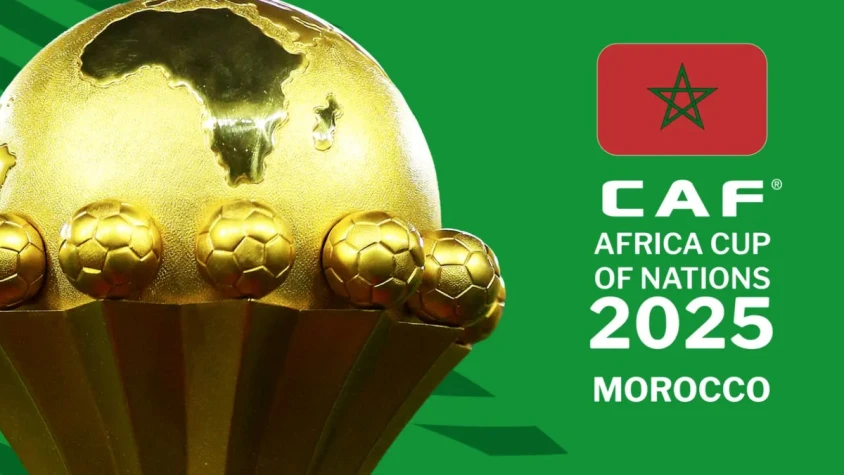
There's something almost cruel about the AFCON draw. Mohamed Salah, a man who has won virtually everything club football has to offer, finds himself staring down the same wall that blocked him in 2021. Same opponent. Same stage. Same stakes.
Senegal.
The Lions of Teranga didn't just beat Egypt in Cameroon four years ago—they broke something in Salah's psyche. A penalty shootout loss in the final. Then, weeks later, another shootout defeat in World Cup qualifying. Sadio Mané converted both decisive kicks. Some wounds don't heal until you cauterize them yourself.
Senegal vs Egypt: the final before the final (17:00 GMT, Tangier)
Let's be direct about this: Senegal are favourites and rightfully so. Pape Thiaw's side operate like a well-oiled machine—11 goals scored, three clean sheets, and a squad depth that Egypt simply cannot match.
But here's where it gets interesting. Egypt have found something in Morocco. Not beauty, certainly. The Pharaohs have won ugly, scraped through, bent without breaking. Against Ivory Coast in the quarter-final, they absorbed 71% possession and still walked away with a 3-2 win. Efficiency over elegance.
Salah himself acknowledged the gap after Saturday's victory over the defending champions, per beIN Sports:
"I can't say we are candidates to win the trophy. The other three teams in the semi-finals have players who play in Europe. Most of our players are based locally."
That humility isn't false modesty. It's strategic expectation management. And it's working. Egypt have conceded in four of their five matches, their defence held together by experience rather than excellence. But when the chances come—and they do come, however rarely—Omar Marmoush and Salah convert with surgical precision.
The Mané-Salah dynamic nobody's talking about
Yes, everybody knows they weren't best friends at Liverpool. Yes, we've all seen the infamous pass incident from 2019. But let's skip the soap opera and focus on what actually matters: statistically, these two have been the continent's most decisive players for a decade.
According to Opta, Mané leads all AFCON contributors since 2015 with 19 goal involvements (10 goals, 9 assists). Salah sits second with 16 (11 goals, 5 assists). Wednesday's match isn't just about national pride—it's about legacy.
Ferdinand Kouli, Mané's former international teammate, told WinWin Sports that the Al-Nassr forward is treating this fixture differently: "Mentally, Mané will treat this match with special attention. The Senegalese players know that facing Egypt is never easy."
Egypt coach Hossam Hassan—who won AFCON as a player at age 40—knows how to manage older heads. His side's average age of 28.9 years is the tournament's second oldest. Experience cuts both ways: it provides composure but costs recovery time. If this one goes to extra time, Senegal's bench depth could prove decisive.
Prediction: Senegal 1-0 Egypt
Expect a cagey affair with minimal chances. Senegal's defensive organisation (only two goals conceded) should contain Egypt's counter-attacking threat. Iliman Ndiaye, the hero against Mali, continues his rich vein of form.
Morocco vs Nigeria: firepower meets fortress (20:00 GMT, Rabat)
If the first semi-final is a chess match, this one promises fireworks.
Nigeria arrive in Rabat as the tournament's most devastating attacking force. 14 goals in five matches—they're two short of the single-tournament record set by Ivory Coast in 2008. Victor Osimhen, Ademola Lookman and Akor Adams have combined to create something genuinely terrifying. The Super Eagles are the only remaining side with a perfect record.
Morocco, meanwhile, have conceded precisely once in five games. Their defensive structure under Walid Regragui is built on discipline and transition speed, with Brahim Díaz—five goals in five games—acting as the outlet valve. The Real Madrid forward could become only the second player in AFCON history to score in six consecutive matches.
Eric Chelle, Nigeria's quietly brilliant coach, isn't hiding from the challenge. After dismantling Algeria 2-0 in the quarter-final, he spoke with unusual warmth about his counterpart:
"Morocco's coach is very good and has exceptional players. I think he has prepared very well for the AFCON. You can't imagine the work that goes into preparing for the AFCON. I take my hat off to him—for example, the coach analyzes the matches of all the teams participating, so we're talking about more than 100 matches."
The respect is mutual but the battle lines are drawn. Regragui, facing mounting criticism about alleged referee bias (Cameroon's Bryan Mbeumo and others questioned decisions in the quarter-final), fired back after the 2-0 win over the Indomitable Lions:
"We're the team to beat. As the team to beat, people will try to find all sorts of reasons to say Morocco has an advantage. The only advantage Morocco has at this AFCON is playing in front of 65,000 spectators. The rest is on the field."
He added, per Al Jazeera: "When you want to kill your dog, you accuse it of rabies. Cameroon didn't score a goal and the referee denied it. People want to make it seem like we're favoured by the referees. We win our matches on the field."
The tactical matchup that will decide everything
Nigeria will be without Wilfred Ndidi, suspended after accumulating yellow cards. That's significant—Ndidi provides the midfield protection that allows Lookman and Osimhen to operate with freedom. Bright Osayi-Samuel is also a doubt after limping off against Algeria.
Morocco's own injury concerns have largely alleviated, though Azzedine Ounahi (calf) and Romain Saïss remain unavailable.
The key battle? Nigeria's high press versus Morocco's transition play. Regragui's side have shown vulnerability when teams deny them time to build—Mali held them to a 1-1 draw in the group stage by doing exactly that. But Nigeria's aggressive approach also leaves space behind, which Díaz and Hakim Ziyech can exploit.
Osimhen, named Man of the Match against Algeria, isn't lacking confidence. Speaking to CAF, he promised Nigerian fans:
"This victory was not easy, and I'm happy the team got the win against Algeria. We'll continue to build on this momentum. Hopefully, we'll get to the final and win it."
Earlier in the tournament, he'd been even more bullish: "We are one of the most feared teams. Any team can come and play us. If they are not good enough, we can trample on any team."
Bold words. But Nigeria have backed them up.
The elephant in the stadium
Let's address it: Morocco haven't won AFCON since 1976. Nearly half a century of drought despite consistently producing elite talent. This tournament, on home soil, represents their best chance in a generation.
The pressure is enormous—Regragui admitted as much. This is Morocco's first semi-final since 2004, when they lost the final to Tunisia. The weight of history, the expectation of 70,000 fans in Rabat, the knowledge that failure would define this golden generation. Nigeria, for all their talent, carry none of that baggage.
That psychological asymmetry could prove crucial in a tight contest.
Prediction: Morocco 2-2 Nigeria (Morocco win on penalties)
This one goes the distance. Nigeria's attacking quality means they will find the net—probably more than once. But Morocco's defensive discipline and home advantage should see them through in a shootout. Football's cruelest arbitrator decides Africa's biggest game.
The bottom line
Wednesday offers two utterly different propositions. Tangier gives us tactical chess, psychological warfare, and the spectre of recent history. Rabat serves pure entertainment: goals, drama, and likely heartbreak for one of Africa's heavyweight nations.
For Salah, this might be the last realistic chance to complete his trophy cabinet. For Nigeria, it's about ending 12 years of hurt. For Morocco, half a century.
The stakes couldn't be higher. And that's exactly why we watch.